Market insight
The Penetration Rate of SITRAK Trucks in Africa: Market Dynamics, Regional Distribution, and Strategic Positioning
The SITRAK series, a premium heavy-duty truck brand developed by China National Heavy Duty Truck Group (SINOTRUK) with MAN technology, has become a significant player in Africa's commercial vehicle landscape over the past decade.
### The Penetration Rate of SITRAK Trucks in Africa: Market Dynamics, Regional Distribution, and Strategic Positioning
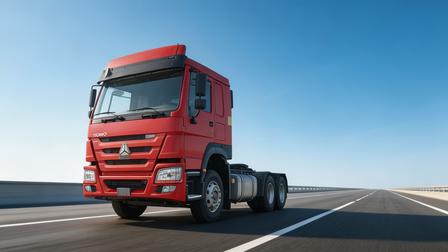
The SITRAK (汕德卡) series, a high-end heavy-duty truck brand born from the strategic cooperation between China National Heavy Duty Truck Group (SINOTRUK) and Germany's MAN SE, has emerged as a significant player in the African commercial vehicle landscape over the past decade. Unlike the mass-market HOWO series, which has long dominated the African entry-level and mid-range heavy truck sectors, SITRAK is positioned to compete directly with premium European brands such as Scania, Volvo, and Mercedes-Benz. Analyzing the penetration rate of SITRAK trucks in Africa requires examining the continent's heterogeneous market structure, the shifting dynamics between new Chinese exports and used European imports, and the strategic localization efforts that are redefining brand presence across regions.
**Overall Market Context and SINOTRUK's Footprint**
To understand SITRAK's penetration, one must first contextualize SINOTRUK's overarching presence in Africa. SINOTRUK has operated on the continent since the 1970s and currently maintains over 300,000 heavy trucks in use across 54 African countries, with more than 200 service stations and 90 authorized distributors established through decades of expansion. As of recent data, SINOTRUK commands approximately 42% of the overall African heavy-duty truck market, with particularly high dominance in West Africa (60-70%) and East Africa (around 60%). However, within this vast portfolio, the HOWO series accounts for the majority of volume, while SITRAK represents the rapidly growing premium segment of SINOTRUK's African business.
Africa's annual heavy truck sales are estimated at around 190,000 to 200,000 units (including both new and used vehicles), with new vehicle imports reaching over 160,000 units in 2024. Chinese brands collectively accounted for 57.5% of Africa's imported new heavy trucks as of 2024, up from 21.1% in 2016, driven by tightening European ELV (End-of-Life Vehicles) regulations and Euro VII standards that restrict used truck exports to Africa. Within this Chinese export surge—where Africa absorbed 143,000 Chinese heavy trucks in 2025 (a 62% year-on-year increase)—SITRAK's penetration is concentrated in markets with stronger logistics economies, stricter emission awareness, and higher fleet professionalization.
**SITRAK's Positioning and Penetration Characteristics**
SITRAK's penetration rate in Africa is segment-specific rather than uniformly distributed. The brand is designed with MAN technology (MC engines, ZF transmissions, reinforced chassis), targeting long-haul logistics, hazardous goods transport, high-grade construction (mixers/concrete pumps), and mining support where reliability, fuel efficiency, and cabin comfort justify a higher upfront cost. Consequently, SITRAK's market share is highest in North Africa, select East African corridors, and emerging premium fleets in West Africa, while remaining limited in price-sensitive rural or purely project-based markets that still favor HOWO or used European trucks.
**Regional Analysis of Penetration Rates**
*North Africa (Maghreb Region: Morocco, Algeria, Tunisia)*
North Africa has traditionally leaned toward European truck brands, but SITRAK has made notable inroads. In Morocco, SITRAK officially entered the market around 2019 and has since secured a strong position in the concrete mixer segment, reportedly ranking first in new mixer truck deliveries by 2022. SINOTRUK's Moroccan factory has operated for over a decade, supporting localized assembly and service, which enhances SITRAK's brand credibility. In Algeria, where SINOTRUK became the leading Chinese brand with a 2023 push into the high-end logistics sector, SITRAK accounted for 381 new orders in 2023 (a 154% increase), contributing to breaking the monopoly of Renault and MAN in premium fleets. Although SINOTRUK's overall Algerian market share is around 15%, SITRAK's penetration within the new premium truck subsegment is growing steadily, especially among large transport companies.
*East Africa (Kenya, Ethiopia, Tanzania)*
East Africa's logistics corridors—particularly the Djibouti–Addis Ababa route—have become key deployment zones for SITRAK C7H and T7H tractors. In Ethiopia, where SINOTRUK's HOWO series holds over 80% of the Chinese-imported dump truck market, SITRAK is increasingly adopted by long-haul logistics firms prioritizing fuel economy and B10 engine life exceeding 1.5 million km. Kenyan industry reports suggest SINOTRUK (mainly HOWO) controls about 55% of the heavy truck market, with SITRAK penetrating slowly via CKD assembly initiatives (e.g., Kenya Vehicle Manufacturers partnership) and targeted at cross-border freight operators. Tanzania's growing infrastructure and mining sectors, supported by SINOTRUK's local assembly base, also see incremental SITRAK adoption in high-value transport contracts.
*West Africa (Nigeria, Ghana, Burkina Faso)*
West Africa is SINOTRUK's strongest region overall, with 60-70% market share in heavy trucks. However, SITRAK's penetration here is more selective. In Nigeria, Africa's largest economy and a core heavy truck importer (23,800 Chinese heavy trucks in 2025), SITRAK G7S tractors are gaining traction among modern logistics providers and oil/fuel transporters upgrading from used European trucks. Similarly, in Burkina Faso, SITRAK C7H ADR-compliant tractors have been delivered in batches to Total and Shell fuel transport fleets, positioning the brand in hazardous goods logistics. Nevertheless, the majority of West African heavy truck demand remains price-driven, meaning SITRAK's penetration rate in absolute unit terms is still modest compared to HOWO, though its premium niche share is rising.
*Southern Africa (South Africa, Zambia)*
South Africa's heavy truck market (15,000-20,000 new units annually) is dominated by European and Japanese brands (Mercedes-Benz, Isuzu, Hino). SINOTRUK's overall share is around 3%, with SITRAK virtually absent in large-scale fleets but present in niche construction and cross-border logistics trials. SINOTRUK plans a South African assembly plant by 2027, which may elevate SITRAK's visibility. In Zambia, partnerships like CFAO Mobility focus on HOWO, though SITRAK is marketed for high-end NX/T7-type operations in mining corridors.
**Factors Driving SITRAK's Growing Penetration**
*Technology Transfer and Reliability Perception:* SITRAK's MAN-derived drivetrain (MC11/MC13 engines, ZF gearboxes) addresses historical perceptions of Chinese truck durability. Its B10 life and warranty terms appeal to African fleet operators transitioning from second-hand European trucks to new premium Asian alternatives.
*Regulatory Shifts Against Used Imports:* European ELV proposals and emission tightening reduce the influx of cheap used Scania/Volvo units, creating room for new Chinese premium trucks at competitive total-cost-of-ownership (TCO) levels.
*Localization and Service Network:* SINOTRUK's 200+ service stations, CKD plants in Nigeria (7,000 units/year), Morocco, and Ethiopia, and growing parts availability reduce downtime fears—a critical barrier for premium truck adoption in Africa.
*Infrastructure-Linked Logistics Modernization:* The AfCFTA (African Continental Free Trade Area) and large-scale infrastructure projects (e.g., Ethiopia–Djibouti corridor, Lagos–Abidjan highway) demand higher-efficiency long-haul tractors, aligning with SITRAK's value proposition.
**Constraints on Penetration Rate**
Despite growth, SITRAK faces structural constraints:
- *Price Sensitivity:* In many African markets, initial purchase price dominates decision-making. SITRAK's higher tag (~1.5-2× HOWO) limits mass adoption.
- *Financing Gaps:* Limited access to lease/fleet financing outside North/East Africa restricts corporate fleet upgrades.
- *Entrenched Used Truck Culture:* In Nigeria, DRC, and Ghana, decades of used European truck reliance create strong inertia, particularly among small operators.
- *Brand Legacy of Competitors:* Mercedes-Benz and MAN retain deep loyalty in North/West Africa; displacing them requires long-term TCO proof.
**Quantitative Estimation of Penetration**
While exact continent-wide SITRAK registration data is fragmented, indicative proxies suggest:
- SINOTRUK's Africa exports exceeded 80,000 units in recent years, with SITRAK likely representing 5-10% of that volume (i.e., ~4,000-8,000 units annually), concentrated in premium applications.
- In Morocco's mixer segment and Algeria's premium logistics, SITRAK may already command 15-25% of the new premium truck subcategory.
- Across Africa's total heavy truck parc (~2-2.5 million units including used), SITRAK's penetration rate remains below 1% in absolute terms but is disproportionately higher in new-premium, long-haul, and hazardous-goods subsegments in North/East/West Africa.
**Future Outlook**
SITRAK's penetration in Africa is poised to grow as:
- AfCFTA stimulates cross-border freight efficiency demands.
- Mining and energy sectors (copperbelt Zambia/DRC, Sahel oil transport) upgrade fleets for safety/compliance (ADR standards).
- Local assembly in Nigeria, Kenya, and Morocco incorporates SITRAK variants, narrowing price gaps.
- Digital telematics and service financing models (e.g., SINOTRUK's "family-like service" ecosystems) improve lifecycle cost competitiveness versus used EU trucks.
By 2030, if current CAGRs in African premium truck demand (~10%+) hold, SITRAK could realistically capture 10-15% of the new premium heavy truck segment in key markets like Morocco, Algeria, Ethiopia, and Nigeria, even if its overall share of Africa's total heavy truck population remains in the low single digits due to the massive used-truck base.
**Conclusion**
The penetration rate of SITRAK trucks in Africa is best described as strategically concentrated rather than broadly diffuse. It leads in niche premium logistics, mixer/concrete transport, and hazardous goods across North, East, and parts of West Africa, underpinned by SINOTRUK's extensive service ecosystem and MAN-technology differentiation. While it cannot yet match the volume penetration of the HOWO series or the entrenched used European parc, SITRAK represents the leading edge of China's upgrade in African commercial vehicle markets—shifting from low-cost substitution to high-reliability competition. Its future penetration will hinge on financing accessibility, continued localization, and Africa's logistics modernization trajectory under AfCFTA and infrastructure expansion.